Planning · When to go
The best time to visit Marrakech, month by month
By Rachid — Owner and itinerary editor, Rachid Excursions
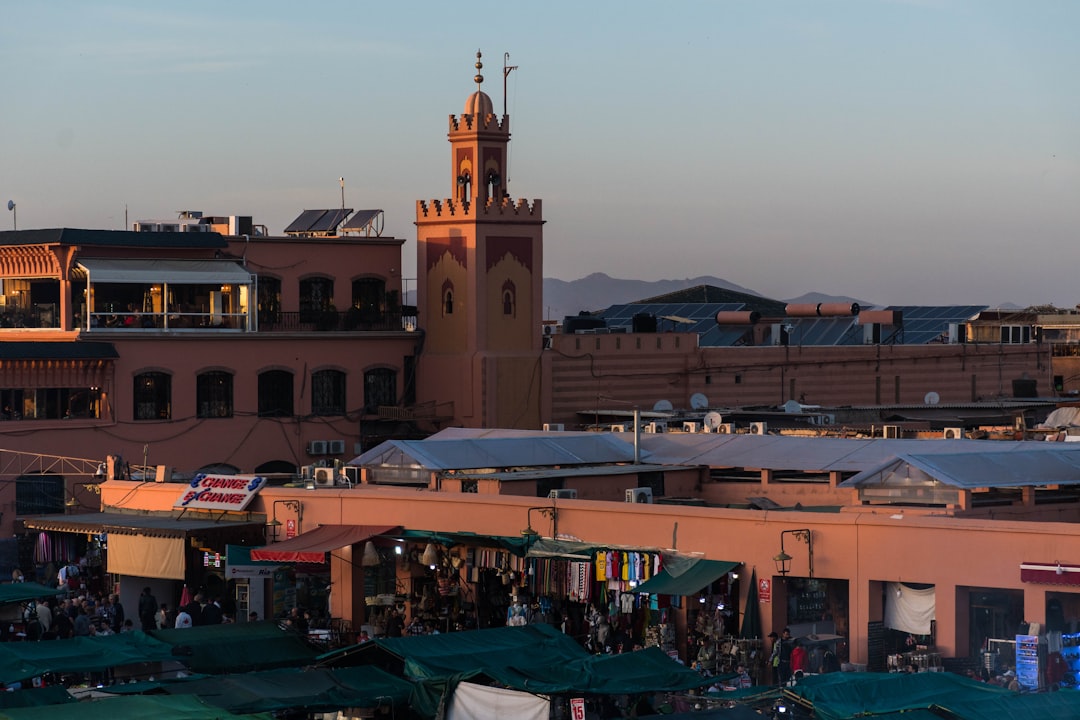
Marrakech has four very different faces across the year — and the right month depends less on your travel dates and more on what you want to do. This guidance combines local planning context with the cited climate source; check a current forecast before travel.
March to May — spring, our favourite window
Days sit at 22–28 °C, evenings are cool enough for a light jacket on a rooftop, and the High Atlas still wears snow — so photos from Aït Ben Haddou and Ouzoud look their best. Wildflowers cover the Agafay stone-desert; almond blossom lines the Ourika valley in early March. Sahara nights in Merzouga drop to 8–12 °C, comfortable in a camp with proper blankets.
Trade-offs: Easter week and Ramadan (moving date) can crowd the medina, and hotel prices climb 15–25 % over April.
June to August — the hot months
Daytime in the medina averages 38 °C and often hits 44 °C in July. The desert is above 45 °C at noon — camel treks move to sunrise and sunset only. This is when locals leave for Essaouira, where the Atlantic keeps things at a breezy 22 °C. If you're coming in summer, we route you to the coast, to Ouzoud waterfalls, to Imlil at 1,700 m, or into the desert only for a night, not a full day of driving.
September to early November — the second sweet spot
September still feels like summer (32–36 °C) but October drops fast into a perfect 24–28 °C. Dates ripen in the Draa valley, olive harvest starts in the Atlas, and the desert light turns from white to gold. It is one of the best windows for a multi-day desert loop — the roads are quiet, camps are calm, and skies are clear for stargazing.
December to February — winter, if you're prepared
Marrakech itself is lovely: 18–20 °C by day, 6–10 °C at night, clear skies, and the medina finally feels calm. But the desert is another story — Merzouga nights routinely drop to 0 °C, occasionally below. Bring a fleece, a hat, and thermal layers if you're going. Snow on the Atlas closes the Tizi n'Tichka pass a handful of times each winter.
Ramadan — a special note
Ramadan shifts about 11 days earlier every year (2026: mid-Feb → mid-Mar; 2027: early Feb → early Mar). Restaurants inside the medina are quieter during the day, iftar at sunset is one of the most special meals you'll ever share, and our tours run normally — drivers eat at sunset in the desert, which is unforgettable to witness.
Sources and verification
These sources support destination, heritage, climate, health or travel-advice context. Prices and supplier details are confirmed in writing for each booking.
- Morocco historical climate data
World Bank Climate Change Knowledge Portal
Long-term climate context; local conditions still need a current forecast.
- Morocco travel advice
UK Government
Current travel, safety, entry and local-law guidance.
Frequently asked
Tours mentioned above
Merzouga 3 Days — Shared
3 Days · 2 Nights · Normal / Standard / Luxury
A shared 3-day / 2-night desert tour from Marrakech to the Erg Chebbi dunes at Merzouga, from €70 per person (Standard €95, Luxury €120), leaving at 07:30. The price covers transport, a hotel night in Dades and a night in a desert camp, 2 breakfasts, 2 dinners and a 1-hour camel ride; lunches are extra. The route: cross the High Atlas via Tizi n'Tichka to the UNESCO kasbah of Aït Ben Haddou and Kasbah Taourirt, then the Rose Valley and Dades. Day 2 drive to Merzouga for a camel ride at sunset and a Berber desert camp with drumming and dinner. Day 3 sunrise over the dunes, then return to Marrakech — or continue to Fes for +€25.
Essaouira Coast Day Trip
Atlantic Medina & Argan Cooperatives
Head west from Marrakech to the wind-city of Essaouira on the Atlantic coast. Departure at 08:45 with a stop on the way at a women's argan oil cooperative, where you'll see how local Berber women press argan for cooking and cosmetics. Arrive in Essaouira for around five hours of free time to explore the UNESCO medina, walk the Skala de la Kasbah sea ramparts, wander the fishing port, relax on the beach or try a camel or horse ride, before returning to Marrakech by 19:00.
Imlil — Private Tour
Full-day private · Guided hike · Berber home visit
A private day in the High Atlas at the foot of Mount Toubkal — Morocco's highest peak. Your driver picks you up in Marrakech in a comfortable air-conditioned vehicle and takes you south to the mountain village of Imlil. There, a local Berber guide leads you on a gentle hike through walnut orchards, terraced fields and stone villages, sharing stories about mountain life. The day ends with a warm welcome inside a Berber family home for mint tea and, if you wish, a traditional home-cooked lunch (paid on the spot).